






Lovibond / The Tintometer Limited
University of Dundee
China remains one of the world’s most important consumer markets, but it is no longer defined by rapid, broad-based growth. In 2026, opportunity lies in understanding how Chinese consumers think, what they value, and where genuine demand is forming.
China’s total retail sales of consumer goods achieved RMB 50.1202 trillion in 2025, (GBP 5.2872 trillion), making it the second-largest consumer market globally. Growth has moderated to the low single digits, but consumption continues to be a central pillar of economic activity, with services and experience-led spending outpacing traditional goods.
In today’s consumer market in China, international origin alone no longer guarantees trust, and brand awareness does not automatically translate into sales. Consumers now prioritise relevance, consistency and credibility over novelty.
Purchasing decisions are more deliberate, even when driven by emotion or impulse.
Therefore, China in 2026 is a market that rewards clarity, relevance and patience. Opportunities exist across multiple sectors, but only for brands that align their strengths with real consumer demand and understand the operational realities of the market.
UK businesses that succeed are those that start with consumer insight, choose their sectors carefully, and build trust over time rather than chasing short-term exposure.
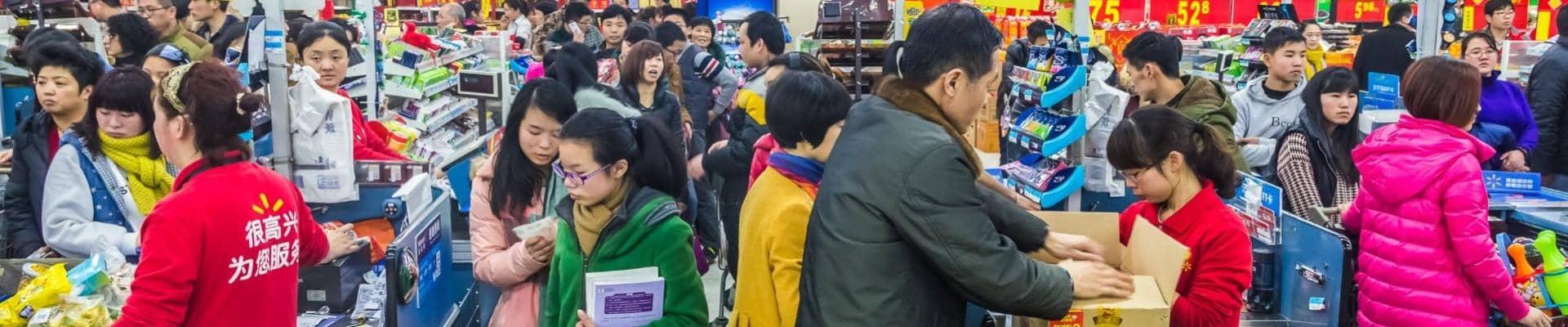
Chinese consumers today are digitally sophisticated, highly selective and increasingly rational. China has more than 1 billion internet users. As of December 2025, China has 1.125 billion internet users, and online retail accounts for 26.1% of total retail sales, one of the highest proportions globally.)
Most of them have already experienced multiple waves of brand launches, influencer marketing and product upgrades. As a result, expectations are high and tolerance for unclear value or exaggerated claims is low.
This is not a low-demand market, but it is a high-expectation market.
Young adults and early-career consumers remain influential, particularly in shaping trends. However, they face work pressure and cost sensitivity, and spend more selectively on products and services that offer emotional value, convenience or self-expression.
Family builders and household decision-makers are highly research-driven and risk-aware. Health, safety, efficiency and reliability are central to their choices, especially for family, home and wellbeing-related purchases.
Silver economy consumers are increasingly digitally engaged and consumption-oriented. China’s population aged 60 and above now exceeds 300 million (323.38 million) [5], driving demand for health, comfort, travel and service-based consumption. Many prioritise health, comfort and service quality, and are open to new brands when communication is clear and trust is established.
Chinese consumers are moving from aspirational to value-justified spending. This does not mean trading down across the board, but paying more selectively for products and services that feel necessary, reliable or emotionally rewarding.
Emotional return is playing a growing role. Consumers increasingly evaluate whether a purchase reduces stress, saves time, improves wellbeing or adds enjoyment to daily life.
Trust is cumulative and fragile. Reviews, peer recommendations and consistent brand behaviour matter more than country-of-origin alone.
China remains one of the world’s most advanced digital consumer markets. Discovery, evaluation and purchase often happen within the same platform ecosystem, driven by short video, livestreaming and social interaction.
China has more than 700 million livestreaming users. (The number of online audio and video users in China exceeds 1 billion.) and livestream-enabled commerce remains a core driver of impulse and content-led purchases.
Consumers expect:
A brand’s digital presence is often assessed as carefully as its product offering.
China is not a single consumer market. Differences across regions, city tiers and income groups remain significant. Lower-tier cities tend to prioritise value and practicality, while top-tier cities reward innovation but are highly competitive.
Successful brands adopt targeted strategies, not one-size-fits-all approaches.
Against this consumer backdrop, several sector trends are shaping opportunity in China. These are not short-term fads, but demand areas linked to lifestyle pressures, demographic change and evolving consumption values.
Health and wellness have become part of everyday consumption. China’s broader wellness economy is estimated to be worth over RMB 10 trillion (GBP 1.05 trillion), (China’s health industry reached RMB 11.5–12 trillion in 2024, GBP 1.21–1.27 trillion), spanning food, fitness, healthcare and lifestyle services.
Demand is driven by prevention, self-management and long-term wellbeing, rather than treatment alone.
Growth areas include functional food and drink, supplements, fitness and health services, sleep and stress management solutions, and products that combine physical and emotional benefits.
Implications for UK brands:
Consumers are increasingly spending on products and services that deliver emotional reassurance, comfort or enjoyment. This includes self-care rituals, affordable indulgences and items that support identity expression.
This trend reflects the search for balance in high-pressure urban lifestyles.
Implications for UK brands:
Younger consumers are driving demand for collectables, limited editions and IP-linked products that foster community participation and repeat engagement. Value is created through belonging and cultural relevance rather than utility.
Implications for UK brands:
China’s retail ecosystem increasingly supports immediate consumption needs, with a market of approximately RMB 971billion (GBP 101.8 billion) in 2025. Consumers expect fast fulfilment and low friction, particularly for everyday or impulse purchases.
Instant retail links content discovery directly to delivery.
Implications for UK brands:
Services consumption is playing a growing role in China’s domestic demand, supported by policy direction and changing household priorities. Growth areas include travel, health, family services, home services, and digitally delivered lifestyle solutions.
Implications for UK brands:
Travel and experience spending continue to recover, with consumers prioritising meaningful, comfortable and shareable experiences. Travel also stimulates demand across food, gifting, personal care and lifestyle products.
Implications for UK brands:
Achieved around RMB 1,104.25 billion (GBP 116.94 billion) in 2025, China’s beauty sector remains important. However, growth is concentrated in specific niches such as fragrance, skin health and routine-based personal care. Consumers are more informed and selective, and competition is intense.
Implications for UK brands:
Browse CBBC's consumer events diary to explore our upcoming initiatives in 2026.
What does the ‘China Opportunity’ look like for brands in the consumer and culture space in 2025?
The Chinese consumer - and the China opportunity - are ever-evolving. The China-Britain Business Council and TONG Global are delighted to bring you this report which we launched at the UK-China Business Forum 2025 - a brand collaboration of sorts - which will hopefully inspire and inform, encourage further collaboration and friendly competition, and help brands chart a path to finding new customers.
The Ultimate Social Media Guide to Sell in China.
The landscape of social media in China is unlike any other in the world.
CBBC is delighted to partner with Sinorbis in sharing the insights and research contained within this guide. We hope it will help educate and support brands as they make their first steps, expand their sales channels and build their brand in the exciting Chinese consumer market.
The Headline Sponsor, WPIC Marketing + Technologies did bespoke research into four particular consumer tribes in the form of a report launched at China Consumer 2024:
Their findings are further explored in WPIC's market research report: 'Profiling China’s Fastest-Growing Consumer Segments' which was launched during the event.